
Sitting in Judgment
The problem with portraits: A brief intro

I have deep down misgivings about painted portraits.
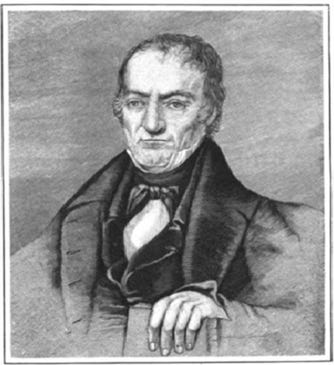
The Judge is partly to blame—a scary great-great-great grandfather whose glare gave me nightmares as a child, his eyes following my every move around the room as if I might steal something. Hanging over the fireplace in the library, he looked, well, judgmental—line-thin lips pressed together into a biblical scowl, in keeping with the ‘good book’ held upright on the table next to his chair. He was dressed in black, of course. ‘A Methodist,’ my mother once hissed.
The above engraving of that painting doesn’t do justice to the gloom and menace of the original.
But looks can deceive: A three-time widower with 11 children, the judge was a beloved three-time mayor of Mobile, Alabama, and father of one of the most beautiful women I have ever seen, whose portrait beamed from a small framed facsimile on a desk in that same room.
Here’s the problem with portraits. Often enough, they tell you nothing or they lie. They are the products of a sitting—time as torture, enough to turn a saint into a sinner, or a kindly judge into a mean old bastard.
I know something about sitting for portraits. My mother periodically hauled me off to ateliers in Paris when we lived there. A visit to a photographer’s studio would have been over in a shutter click. But no, ‘Paris is a city of painters. . .’
I don’t remember the first sitting, at age five, seated on a fallen log against a sylvan setting wearing a yellow dress, but I liked that one best. My mother thought my legs looked foreshortened, and would later have them ‘corrected’ by some other painter.
I was six or seven when off we went again—this time to an atelier belonging to a count whose specialty was horses. Not only did he have a stuffed white horse right there in the studio, he had been commissioned to paint my father riding in the Bois de Boulogne, which he did every morning. To his credit, the count didn’t pose me on a horse. Instead, he zeroed in on my profile close-up—small, sweet and simple.
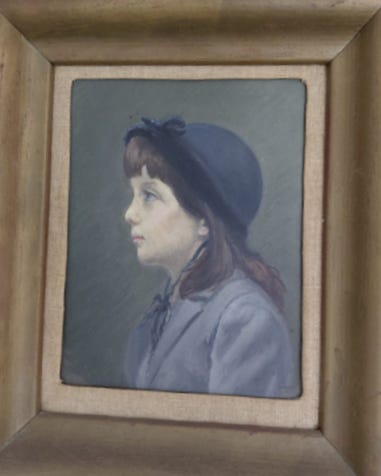
My mother loved it. I didn’t love it, but I’ve kept it ever since because she did.
There were more sittings, even after we left the ‘city of painters’—but none worth spilling any more memories.
Sitting for a portrait is one of life’s strangest social encounters—a power imbalance that upends reality. Judges, presidents, kings, are suddenly rendered powerless in the presence of someone holding a paintbrush. The rest of us are rendered sleepy and bored, our resting faces forever caught in the headlights of a stranger’s scrutiny—for better or for worse.
Mendacity and personal experience are not my only problems with portraits. And there are plenty of exceptions in the canon to take my breath away every time. But I admit to a bias I will try to explain when I turn my own headlights1 onto art history’s famous faces. Do stay tuned.
Until then, a much-needed Happy New Year to us all—especially you, Substack family, followers and dear subscribers!
Portraits, especially self-portraits, fascinate me. I’ve sat for a couple. The drawing of me in my 20s makes me look at least 60. An oil sketch from my 50s, facing me as I write this, confronts me every day with my much younger, twirling self. I look forward to your next essay on portraiture.
I really enjoyed reading this ! Looking forward to your take on art history’s famous faces and happy new year! :)