
Jena Paradies
Vision, Synchronicity and the Algorithms of Chance

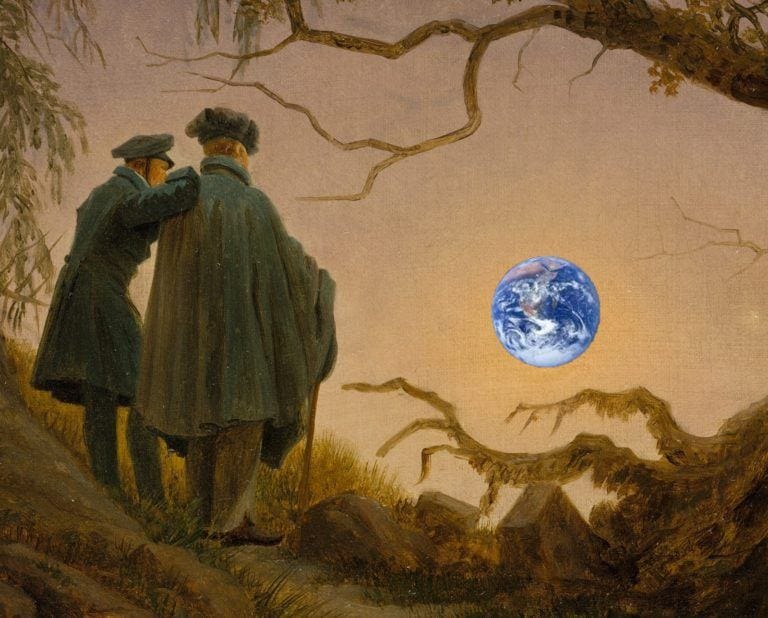
Every beloved object is the center point of a paradise. —Novalis
The first full moon I saw after the operation looked as if it might burst, like a balloon with too much helium. It loomed large on the horizon. I could distinguish its sharp contours, its craters, its tranquil seas—familiar terrain confirming a long abandoned memory of what the moon looked like.
Too many moons had gone by when all I could see were the fractured contours of a shapeless object in the night sky where the moon should have been. The problem was cataracts, or clouding of the ocular lens.
Advancing age metes out decline in increments.
I had hardly noticed the changes in my vision. Online gave me second-hand access to the world’s visual splendor and diversity through photographs and videos—none of which prepared me for the increasing murkiness that met my gaze when I stepped outside into the daylight.
Even before the bandage came off, the lens implant’s ID card confirmed it: I am a camera—with a new Zeiss lens made in Jena, a university town in Thuringia, Germany.

Jena was back in my life.
How could that be? I had never visited the city, only passed through it on the train to Weimar.
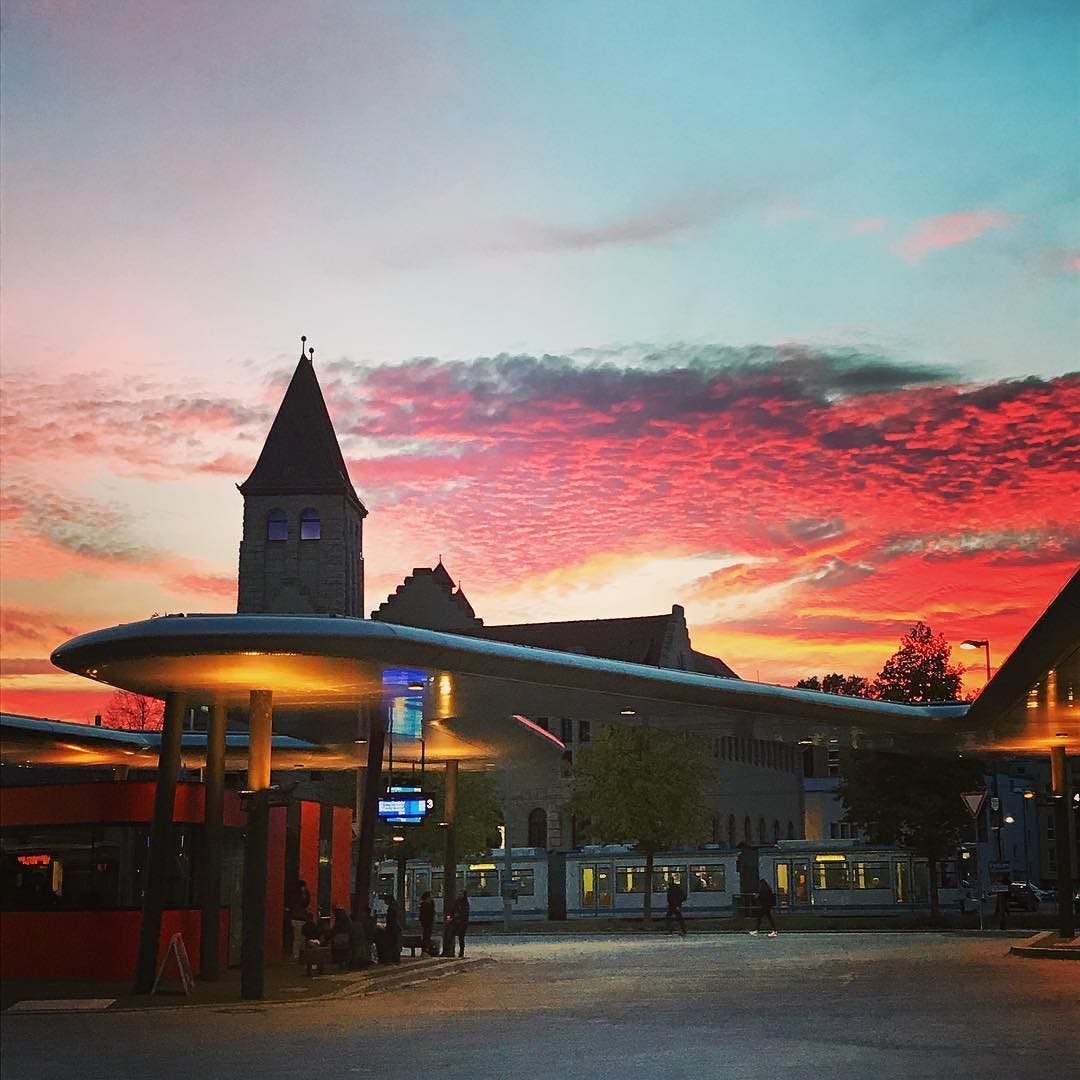
As I cautiously opened my eye to a rush of fine details I hadn’t been able to see a week earlier, the words that leapt to mind were ‘Jena Paradies’, Jena’s train station, a name that had always made me smile.
As it turns out, Jena’s Paradise is a nearby park. Mine is a second chance at sight.
Jena is famous for Carl Zeiss, a builder of precision instruments for scientific study, who founded his eponymous enterprise there in 1846. From the beginning, Zeiss made it possible to see much more of the world—through better microscopes, telescopes, magnifying glasses, binoculars, and eventually camera lenses. The company, now a global entity, quietly pervades our lives, with lenses everywhere, including the new ones inside my eyes.
Zeiss has even been to the moon, where its lenses remain to this day, lying face up in their Hasselblads on the lunar floor. Aldrin and Armstrong took the exposed film with them but left the cameras behind to make room for more moon rocks.
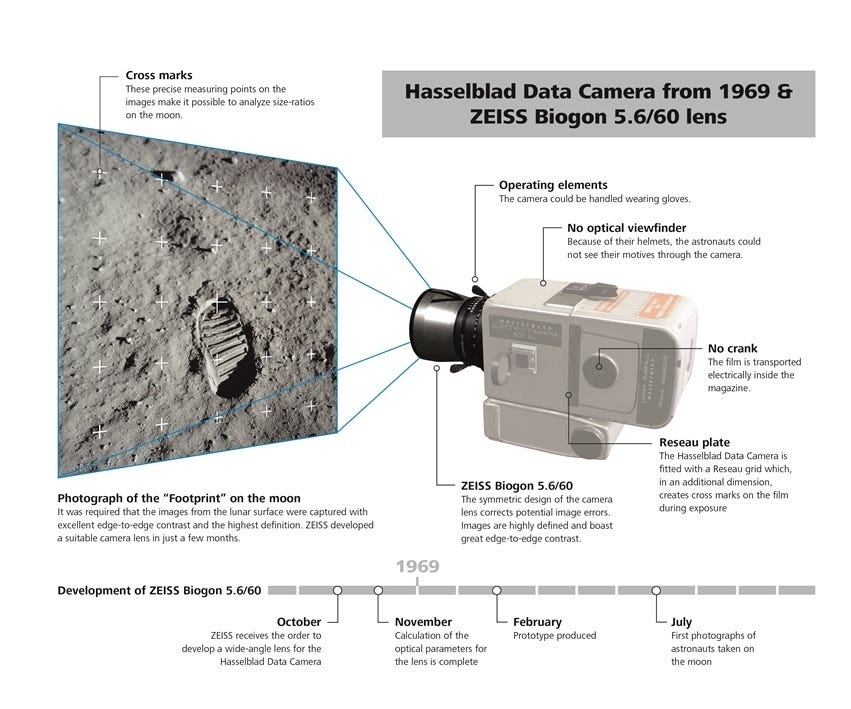
Now when I look up at the moon, I imagine those faraway lenses gazing longingly at my new ones across the spatial divide. ‘Come and get us.’
Accident is simply unforeseen order. —Novalis
Synchronicity is a consequence of the algorithms of chance always humming in the background. Finding connections where none seem to exist, or plumbing the archives of past experience to link with hints from the present, they seem to tailor the timing of synchronicity for maximum poetic effect.
Jena entered my life in early childhood. Every weekday for more than two years I walked across the Pont d’Iéna in Paris to play in the park of the Eiffel Tower with my friends. If France ever gets woke about its former Emperor’s war-mongering, it will face a cluster of Jenas to be renamed—the Place d’Iéna, the Avenue d’Iéna, the Pont d’Iéna and the Metro station.
As a teenager, I returned to Paris with my parents for a visit. Early one Sunday morning, as we were leaving the hotel (the d’Iéna, of course, on the Avenue d’Iéna) the hum of a motorcade moving slowly up the deserted avenue caught our attention. It was President Eisenhower on his way somewhere.
As his limo glided by, he waved to us, just as he had seven years earlier in front of the American Cathedral on the Avenue George V, when he was still a General. (I have a Zelig-like history of being waved at: On my only visit to Japan, within hours of landing, I was waved at by its emperor. But that’s another story. . .)
I’m sure Napoleon did not wave at philosopher Hegel on a street in Jena on October 13, 1806, one day before the famous Battle of Jena. But Hegel was just as starstruck as I might once have been, given my on-again-off-again interest in the problematical Frenchman.
As he wrote to a friend:
“I saw the Emperor – this world-soul – riding out of the city on reconnaissance. It is indeed a wonderful sensation to see such an individual, who, concentrated here at a single point, astride a horse, reaches out over the world and masters it … this extraordinary man, whom it is impossible not to admire.”
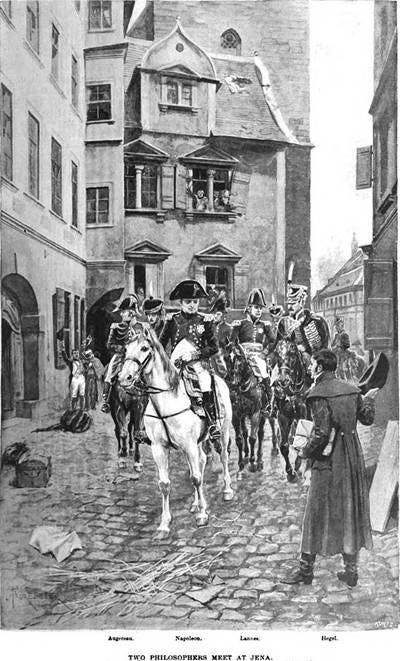
Hegel can’t have been unaware of the reason for Napoleon’s presence in Jena. His mind must have been clouded by The Phenomenology of Spirit, a work he was just finishing.
The very next day, Prussian troops were trounced on the battlefield.
The current, protracted invasion of Ukraine with its barbaric disregard for civilian life or the rules of war, makes the Battle of Jena seem like a surgical strike, even if the numbers involved were staggering. The fate of Prussia was decided within a few hours, by a combined force of 95,000 that would just about fill Wembley Stadium, fighting near the town of Jena whose population at the time was ca. 5000.
Schiller, had he lived that long, would not have cherished a chance encounter with Napoleon in Jena. Wary of the French Revolution and its anarchic aftermath, he had predicted early on that a strongman would rise to fill the power vacuum and extend his mandate across Europe.
Schiller’s day job teaching history at the University of Jena coincided with his trilogy of plays, Wallenstein, which once occupied an entire semester of my own life, as I struggled to prove, in a college term paper, that he had written the plays with Napoleon in mind.
The characters of Wallenstein and Napoleon are strikingly similar. Even if the timeline made it too close to call, the possibility of such a post-revolutionary upstart had been clear to Schiller. And Napoleon had already achieved fame with victories in Italy and Egypt by the time Wallenstein was completed in 1799.
The difficulty in proving such a hypothesis is compounded by the fact that Schiller apparently never once uttered Napoleon’s name or put it to paper—a silent protest against those who admired him—including his close friend Goethe.
Were it not for The Invention of Nature, Andrea Wulf’s illuminating biography of Alexander von Humboldt (the one deserving world-soul), Jena might have remained hardly more than a few odd references in my bio, along with a weakness for Romanticism.
The lively chapter on Humboldt’s intense friendship with Goethe and their scientific collaborations in Jena demonstrates how Goethe taught Humboldt to find poetry and emotion in his scientific work—the key to his immense appeal across the globe during his lifetime.
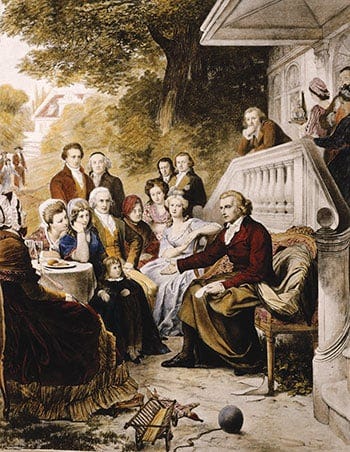
In the period between 1790 and 1806 Jena was an intellectual playground, spawning new -isms in philosophy, most importantly early Romanticism, also known as Jena Romanticism. The letters between Schiller and his friend Christian Gottfried Körner suggest a frenzy of creativity and exchanges of ideas.
There were probably more polymaths per capita in Jena at that time than anywhere on Earth—discussing, arguing, collaborating, writing, publishing, researching, and socializing.
The Humboldt brothers were catalysts for new ways of thinking and knowing: Alexander, about scientific methods, and Wilhelm, about language.
But there were others, poets and thinkers alike—Novalis, Fichte, Schelling, the Schlegel brothers, Herder, Hegel, Hölderlin, Goethe on visits from Weimar, and especially Schiller, who often played host.
For a short time Jena, this lesser-known oasis of culture in the shadow of Weimar, was the ‘it’ place for a profound upheaval of ideas about nature, art and science.
Jena today is a city of science and technology, but it hasn’t abandoned philosophy. Not long ago, the Friedrich-Schiller University in Jena hosted an international conference on Romanticism. And it maintains an extensive database called Gestern-Romantik-Heute, consolidating worldwide information about events and publications related to Romanticism.
Romanticism has been considered a diversion from the progress-oriented rationality of the Enlightenment. For me it’s a refuge from contemporary cool and its shallow disregard for the powerful forces around and within us—nature, universe, consciousness, spirit, awe: It’s a refuge mindful of history, of the Sturm und Drang of our endangered future, of emotions too deep for the page, of beauty remembered and retrieved from the purgatory of nostalgia.
When I stand before Caspar David Friedrich’s sublime The Sea of Ice, I am certain that he saw the end coming—recognizing the awful beauty in destruction. In stark contrast to his Biedermeier couples appreciating a moonrise, in Sea of Ice all that’s left of our presence on Earth is a shipwreck obscured by massive colliding slabs of ice. How prophetic he was!
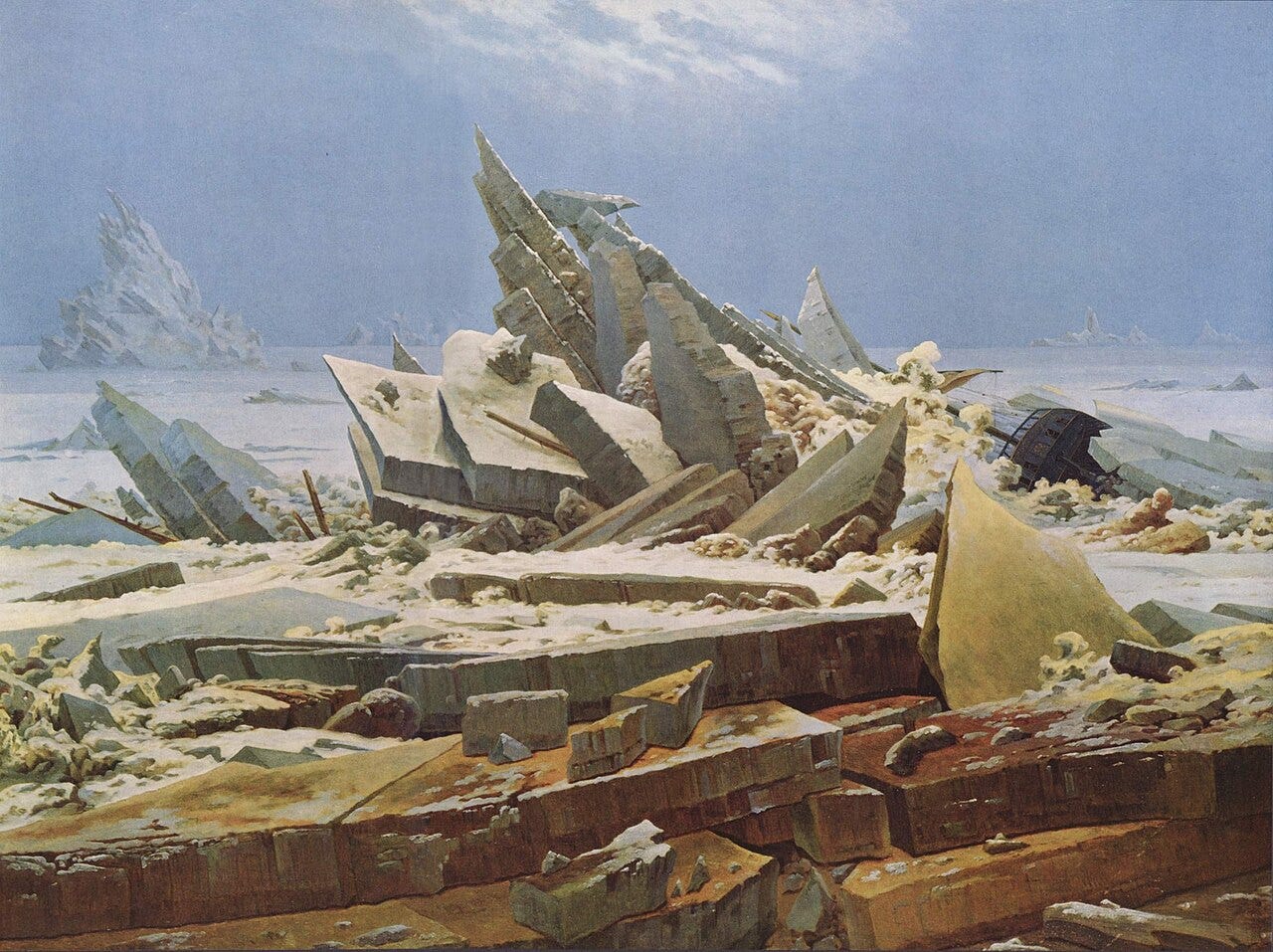
The Romantic poet Novalis asks us ‘to romanticize the world.’ I’m all for it if that gives us the impetus to save it. (Where is Humboldt when we need him most?)
My Romanticism 2.0 would include Friedrich’s pessimistic vision and Anselm Kiefer’s aesthetics of destruction, featuring the beauty of a world in ruins.
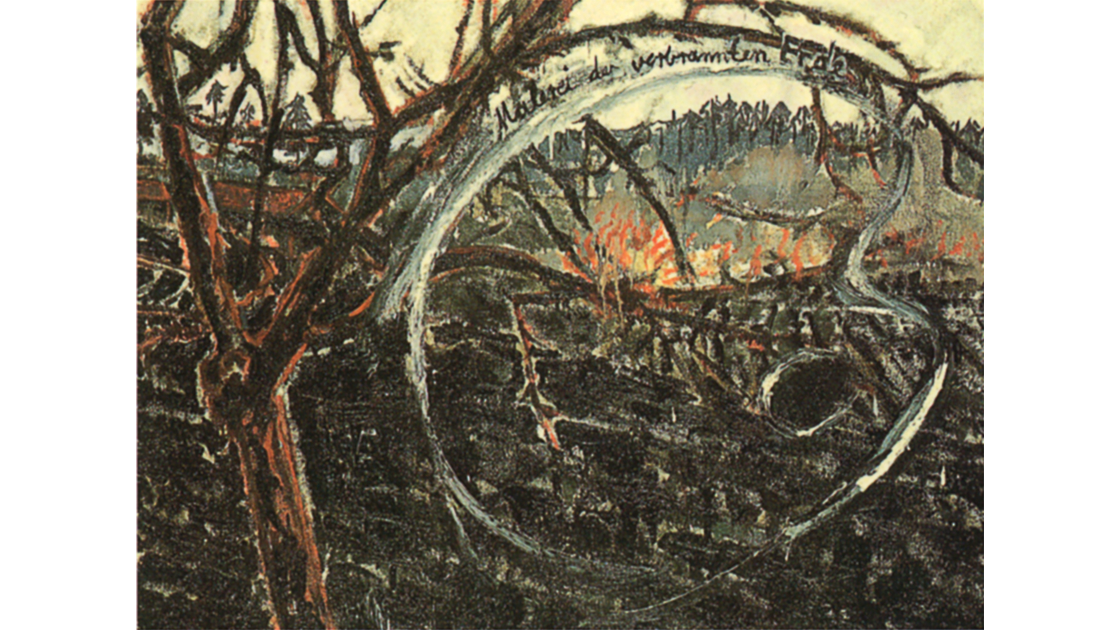
In this inversion of Romanticism, where beauty and awe continue to exist, our emotions are still grand, but anguish has joined exaltation, as we begin the mourning phase of a loss we haven’t yet experienced.
Paradise is scattered over the whole earth, and that is why it has become so unrecognizable. —Novalis
I’ve been thinking a lot about vision. Foresight, hindsight, insight serve as important add-ons to our thinking. The time for foresight is already over. If all goes south, there won’t be time for hindsight. That leaves us with insight, a timeless version of paying attention that could still yield solutions.
The climate crisis has a dramaturgical problem. It’s slow and insidious, with few visible takeaways we haven’t already seen. An egg sizzling on a hot sidewalk? Another iceberg crumbling into the sea? One more polar bear?
If AI was visionary, it would focus on what matters most: saving our earthly paradise from the destructive forces we’ve imposed on it. If AI was a sentient Romantic, it would care enough to do just that. Wishful thinking.
To romanticize the world is to make ourselves aware of the magic, mystery and wonder of the world; it is to educate the senses to see the ordinary as extraordinary, the familiar as strange, the mundane as sacred, the finite as infinite. —Novalis
I do this every morning as I stare out the window. Now that my vision is back, the ‘ordinary’ does seem ‘extraordinary’, the ‘familiar’ has a strange new brilliance, the ‘mundane’ is somehow exotic.
I still can’t see what’s beyond the horizon. I still can’t see a way out of our global predicaments. But curiosity has returned, and wonder at all that I do see. Maybe now’s the time to finally go see Jena.
We dream of travels through the universe: Isn’t the universe inside us? —Novalis
An earlier version of this essay appeared in 3 Quarks Daily in 2022.
This is a fabulous essay, Brooks. Thank you.
How interesting! More synchronicity- I recently wrote an essay that involved a Friedrich painting and I’m planning an essay on Novalis.